
Is Hawaii Expensive? A Realistic Guide to Hawaii Vacation Costs
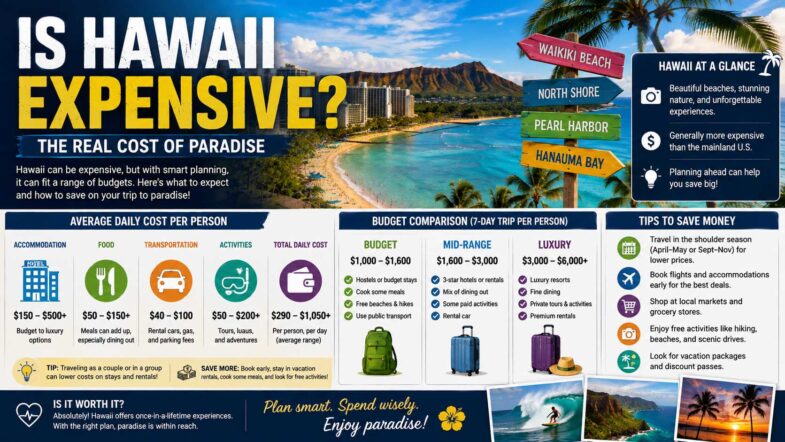
If you are planning an island vacation, you may quickly wonder: is Hawaii expensive compared with other popular destinations? The short answer is yes. Hawaii can be an expensive place to visit, especially once you combine airfare, accommodation, restaurant meals, transportation, and activities. However, a Hawaiian vacation does not have to become an unlimited spending spree. By choosing the right island, travel dates, accommodation, and activities, you can control a surprisingly large part of your budget.
Hawaii’s biggest advantage is that many of its most memorable experiences are outdoors. Beaches, scenic drives, hiking trails, sunsets, viewpoints, and coastal walks can cost little or nothing. Therefore, travelers who spend strategically on hotels and transportation can still enjoy an incredible vacation without booking expensive excursions every day.
Is Hawaii Expensive for a Vacation?
Yes, Hawaii generally ranks on the expensive side for a U.S. vacation. However, your actual spending can vary dramatically.
For example, a couple staying at a luxury beachfront resort, renting a premium vehicle, eating every meal at restaurants, and booking daily tours could spend several times more than travelers staying in a condo and preparing some of their own meals.
As a general planning range, excluding airfare to Hawaii, travelers might expect daily costs like these:
| Travel Style | Approximate Daily Cost Per Person |
|---|---|
| Budget-conscious | $150–$250 |
| Comfortable mid-range | $250–$450 |
| Luxury | $500+ |
Hotel rates, rental cars, activities, taxes, and seasonal demand can change significantly.
Therefore, when estimating the cost of trip to hawaii, build your budget around your actual island, dates, and preferred travel style rather than relying on one average figure.
Why Is Hawaii So Expensive?
Location plays a major role. Hawaii sits thousands of miles from the continental United States, so many products must travel considerable distances before reaching stores, hotels, and restaurants.
As a result, groceries, restaurant ingredients, construction materials, fuel, and other everyday goods can carry higher costs.
Tourism demand also affects prices. Beachfront accommodation and rental cars become particularly expensive during popular vacation periods. Likewise, limited inventory on individual islands means prices can rise quickly when demand increases.
Taxes and resort-related fees can raise the final bill as well. Consequently, a hotel room advertised at one nightly price may cost noticeably more after taxes, parking, and resort fees are included.
That difference is why travelers should compare the final booking total rather than only the advertised nightly rate.
How Much Does Accommodation Cost in Hawaii?
Accommodation will often be your largest expense after airfare, particularly if you want to stay close to the beach.
Budget hotels, hostels, and basic vacation accommodations can reduce costs. Meanwhile, mid-range hotels usually provide more amenities and convenient locations without reaching luxury-resort pricing.
Beachfront resorts are another story. Depending on the island and season, premium properties can easily cost several hundred dollars per night, while high-end suites may cost much more.
However, location matters almost as much as hotel category.
A slightly more expensive property near restaurants, beaches, and attractions could reduce your transportation expenses. Conversely, a cheaper hotel in an isolated area might require a rental car for your entire stay.
Therefore, compare the complete vacation cost rather than choosing accommodation based solely on the room price.
When Is Hawaii Less Expensive to Visit?
Timing can make a major difference to your budget.
Generally, periods between major vacation seasons can offer better value than Christmas, New Year, spring break, and peak summer travel dates. However, airfare and hotel pricing changes constantly, so there is no single cheap week that works every year.
For a broader look at weather, crowds, seasonal patterns, and travel conditions, our guide to the best time to visit hawaii can help you choose dates based on more than price alone.
Consider the shoulder seasons
Late spring and parts of fall can sometimes provide a useful balance between weather, crowds, and pricing.
Still, do not assume every date in these periods will be cheap. Conferences, school breaks, special events, and airline demand can temporarily push prices higher.
Therefore, compare several date combinations before booking. Even shifting your trip by a few days can sometimes produce meaningful savings.
How Expensive Is Food in Hawaii?
Food can become expensive surprisingly quickly, especially if you eat breakfast, lunch, and dinner at restaurants.
Resort restaurants usually sit toward the higher end of the price range. Meanwhile, local cafés, food trucks, plate-lunch restaurants, farmers markets, and casual takeaway spots can offer much better value.
One of the easiest strategies is booking accommodation with a kitchenette.
Then, instead of buying three restaurant meals every day, you could prepare breakfast, pack simple snacks, and spend more on a memorable dinner.
Grocery prices can still be higher than on the mainland. However, preparing some meals will generally cost less than relying entirely on restaurants.
You can also try local favorites without making every meal a major dining event. Poke, plate lunches, fresh tropical fruit, shave ice, and local bakery items can become part of the experience while keeping the food budget manageable.
Transportation Costs Can Change Your Entire Budget
Transportation varies considerably between islands.
On Oahu, travelers staying around Waikiki may manage much of their trip without a rental car. Public transportation, walking, rideshares, and organized tours can cover many popular areas.
However, a car becomes far more useful when exploring destinations outside Honolulu.
On Maui, Kauai, and the Island of Hawaii, renting a car is often the most practical option because attractions are spread across larger areas.
Before booking, check more than the advertised rental rate. Insurance, fuel, hotel parking, airport fees, and taxes can substantially increase the total.
For instance, if your hotel charges daily parking, keeping a rental car for seven nights may be unnecessary. Instead, you could rent one only for the days when you plan longer island drives.
Free and Low-Cost Activities Make Hawaii More Affordable
Fortunately, enjoying Hawaii does not require an expensive activity schedule.
Likewise, scenic viewpoints, coastal walks, hiking, swimming, and sunset watching can fill several days at little cost.
If underwater scenery is a priority, researching the best places to snorkel in hawaii before your trip can help you identify beaches where you may enjoy excellent snorkeling without automatically booking a costly boat excursion.
However, ocean conditions change. Therefore, always check local warnings, surf conditions, lifeguard information, and beach-specific safety guidance before entering the water.
Paid experiences can still be worth budgeting for. A luau, whale-watching trip, surf lesson, helicopter tour, or boat excursion could become a highlight of your vacation.
Instead of booking everything, though, choose one or two premium experiences and balance them with free days.
Is Kauai Expensive Compared With Oahu?
Your choice of island can significantly affect your spending.
Oahu generally offers the widest range of accommodation, restaurants, transportation, and entertainment. Because Honolulu has more competition and public transportation, budget-conscious visitors may find it easier to control certain expenses there.
Kauai feels quieter and more nature-focused. However, visitors often benefit from having a rental car, which can raise costs.
Fortunately, many of the best things to do in kauai revolve around beaches, scenic landscapes, viewpoints, hiking, and outdoor exploration. Therefore, activity spending can remain relatively low if nature is your main priority.
Maui can become expensive around popular resort areas, although travelers can still save by staying away from premium beachfront properties.
Meanwhile, the Island of Hawaii offers enormous geographic variety. Yet, because attractions are spread over considerable distances, fuel and car rental costs deserve extra attention.
Is It Expensive to Live in Hawaii?
Travelers sometimes ask is it expensive to live in Hawaii after noticing vacation prices. Although living costs and vacation costs are separate questions, several factors affect both.
Housing, groceries, electricity, fuel, and imported products can be costly. Therefore, the question how expensive is it to live in Hawaii requires much more than comparing hotel prices with rent.
Likewise, someone researching is Hawaii expensive to live in should consider individual islands and communities separately. Honolulu, resort communities, and more rural locations do not share identical costs.
For vacation planning, however, the useful takeaway is simple: local operating costs can influence what visitors pay for restaurants, transportation, accommodation, and services.
What Should You Actually Spend Money On?
A good Hawaii budget does not mean choosing the cheapest possible option every time.
Instead, decide which experiences matter most.
For example, if waking up beside the ocean is part of your dream vacation, spending more on accommodation might make sense. Then, you could reduce restaurant and activity spending.
Alternatively, if you plan to explore from morning until evening, an expensive resort room may provide little value. A comfortable inland hotel or condo could leave more money for a rental car and excursions.
Understanding what is hawaii known for can also help you prioritize. Beaches, volcanic landscapes, surfing culture, tropical scenery, hiking, marine life, and distinctive local food all provide different ways to experience the islands, many of which do not require luxury spending.
Spend heavily on what you will remember. Save on the parts that matter less to you.
A Sample 7-Day Hawaii Budget for Two
Consider a couple planning a comfortable seven-night trip.
They might budget roughly:
- Airfare: highly variable depending on departure city and season
- Accommodation: $1,400–$2,800+
- Rental car and transportation: $400–$800+
- Food: $700–$1,200+
- Activities: $300–$800+
- Miscellaneous costs: $150–$300+
Therefore, a mid-range week for two can quickly reach several thousand dollars.
However, this example is not a quote or guaranteed average. Choosing a hostel, using hotel points, avoiding a full-week rental car, cooking meals, or traveling during a lower-demand period could reduce the total considerably.
Likewise, luxury resorts and premium excursions could push the same seven-day trip far above this range.
Smart Ways to Visit Hawaii for Less
First, compare flights before choosing your exact island itinerary. Sometimes airfare differences can outweigh small hotel savings.
Next, check accommodation totals carefully. Resort fees and parking can turn an apparently affordable hotel into an expensive choice.
Then, limit restaurant meals strategically. Buying breakfast supplies and snacks can produce noticeable savings over a week.
Also, avoid filling every day with paid tours. Hawaii’s landscapes provide plenty of memorable free experiences.
If you plan to rent a car, compare the cost of renting for selected days against keeping it for the entire vacation.
Finally, reserve expensive essentials early when your plans are firm. Waiting until arrival can leave you with fewer options, particularly during busy travel periods.
Hawaii Travel Costs: Frequently Asked Questions
Is Hawaii expensive compared with other U.S. destinations?
Yes, it can be. Accommodation, food, transportation, and imported goods often cost more than in many mainland destinations. However, free beaches and outdoor attractions can offset part of that difference.
How much money should I take to Hawaii for a week?
Your required budget depends heavily on whether flights and accommodation are already paid. For daily spending, calculate meals, transportation, activities, parking, tips, and emergency funds separately rather than relying on one universal number.
Can you visit Hawaii on a budget?
Yes. Choose modest accommodation, travel outside peak periods when possible, prepare some meals, use free beaches and hikes, and avoid renting a car when you genuinely do not need one.
Is $100 a day enough for Hawaii?
It may cover basic daily spending for a very careful traveler if accommodation and flights are already paid. However, restaurant meals, rental cars, parking, and paid activities can quickly push daily costs above $100.
Why is Hawaii so expensive for tourists?
Its remote location contributes to higher costs for goods and services, while strong tourism demand can increase accommodation, rental car, and activity prices. Resort fees and parking charges can also make advertised prices look lower than the final cost.
Which Hawaiian island is best for budget travelers?
Oahu is often one of the easiest islands for budget-conscious visitors because it has a broad accommodation range, many restaurants, public transportation, and numerous free attractions. However, the cheapest option will depend on your travel dates and available deals.
Making an Expensive Destination Work for Your Budget
So, is Hawaii expensive? Yes, particularly when you compare accommodation, dining, rental cars, and resort costs with many mainland destinations. Still, expensive does not automatically mean unaffordable.
The biggest savings usually come from major decisions rather than tiny sacrifices. Choose your dates carefully, compare the real hotel total, rent a car only when it adds value, mix restaurant meals with simple groceries, and make Hawaii’s free natural attractions a major part of your itinerary.
Most of all, decide what matters to you before spending. If your perfect Hawaii trip means watching sunsets, swimming, hiking, eating local food, and enjoying the islands at a relaxed pace, you may need far less money than a schedule packed with luxury resorts and paid excursions.